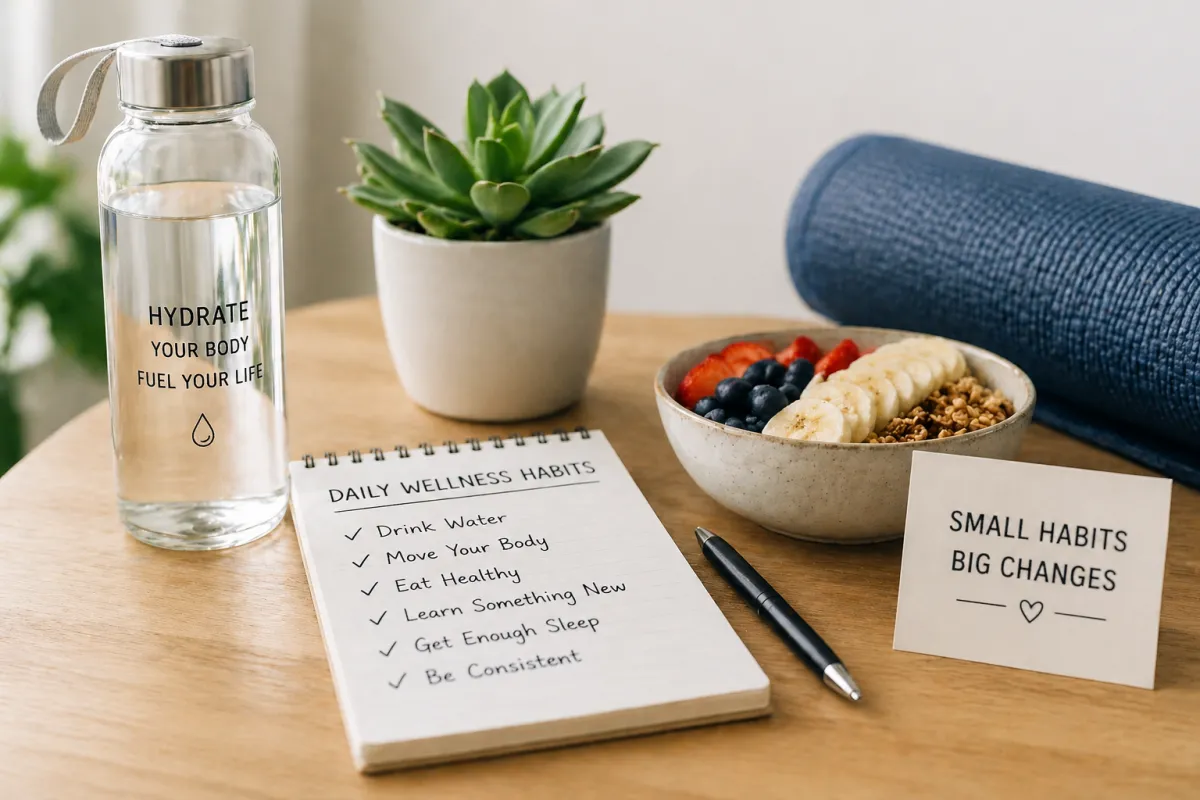
Why Daily Habits Matter More Than Motivation for Long-Term Wellness
Long-term wellness is built through consistent daily habits rather than short bursts of motivation. Simple routines like hydration, balanced nutrition, and continuous learning help improve energy, focus, and overall health over time.
Key Takeaways
Consistency matters more than motivation
Small habits compound into long-term health benefits
Hydration plays a major role in energy and focus
Learning and awareness improve lifestyle decisions
Sustainable routines create lasting results
The Problem with Relying on Motivation
Many people wait until they feel motivated to start improving their health.
The problem is that motivation is temporary.
Some days you feel energized and focused. Other days, not so much.
That’s why long-term wellness is built on habits, not motivation. Small, consistent actions done daily create results that last.
Why Daily Habits Are the Foundation of Wellness
Habits remove decision fatigue. You don’t have to think about what to do. You simply do it.
Examples of simple wellness habits include:
Drinking enough water
Moving your body daily
Getting consistent sleep
Learning something new
According to the Centers for Disease Control and Prevention, consistent lifestyle habits are one of the most important factors in maintaining long-term health.
If you want to build stronger routines, you can explore more ideas through wellness resources on TATMAR.
The Role of Hydration in Energy and Focus
Hydration is one of the most overlooked aspects of daily wellness.
Even mild dehydration can lead to:
Fatigue
Headaches
Reduced concentration
The Harvard School of Public Health explains that proper hydration supports brain function, energy levels, and overall performance.
If you're looking for practical ways to stay consistent, check out these hydration tips to improve your daily routine.
Building Routines That Actually Stick
The key to building habits is simplicity.
Start small:
Drink water first thing in the morning
Take short movement breaks during the day
Set a consistent sleep schedule
Over time, these small actions become automatic.
Consistency is what creates long-term change.
The Power of Learning in Personal Wellness
Wellness is not just physical. It is also mental and educational.
People who continue learning about health and lifestyle choices are more likely to:
Make informed decisions
Stay motivated long-term
Adapt to new strategies
According to the National Institutes of Health, health education plays a major role in improving overall well-being.
If you're interested in expanding your knowledge, you can join wellness learning opportunities to stay informed and inspired.
Why Natural Lifestyle Choices Matter
Incorporating natural wellness solutions into your routine can complement your habits.
This includes:
Nutritional support
Eco-friendly products
Clean lifestyle choices
These options help support your overall health without adding unnecessary complexity.
You can explore curated options through natural wellness solutions to support your daily routine.
The Compound Effect of Small Changes
One of the most powerful concepts in wellness is the compound effect.
Small actions done daily lead to big results over time.
For example:
Drinking enough water improves energy
Better energy improves productivity
Increased productivity reduces stress
Everything is connected.
The goal is not perfection. It is consistent.
Signs Your Daily Habits Need Improvement
If you’re experiencing:
Low energy
Difficulty focusing
Inconsistent routines
Lack of motivation
It may not be a lack of effort. It may be a lack of structure.
Improving your daily habits can create noticeable changes quickly.
How to Start Improving Your Wellness Today
You don’t need to overhaul your entire lifestyle.
Start with one or two changes:
Increase water intake
Set a simple daily routine
Learn something new each week
Small steps lead to lasting results.
Frequently Asked Questions
How long does it take to build a habit?
Most habits take a few weeks to become consistent with daily practice.
Is hydration really that important?
Yes. It directly affects energy, focus, and overall health.
Do I need a complex routine?
No. Simple, consistent habits are more effective.
Can learning improve wellness?
Yes. Knowledge helps you make better lifestyle decisions.
Final Thoughts
Wellness is not built in a single moment. It is built daily.
The small habits you choose today shape your energy, focus, and health over time.
By focusing on consistency, hydration, learning, and simple routines, you can create a lifestyle that supports long-term well-being.
If you’re ready to explore more tools and resources, visit TATMAR.org and discover ways to support your wellness journey.
