Why You Still Feel Dehydrated After Drinking Water | Hydration Guide
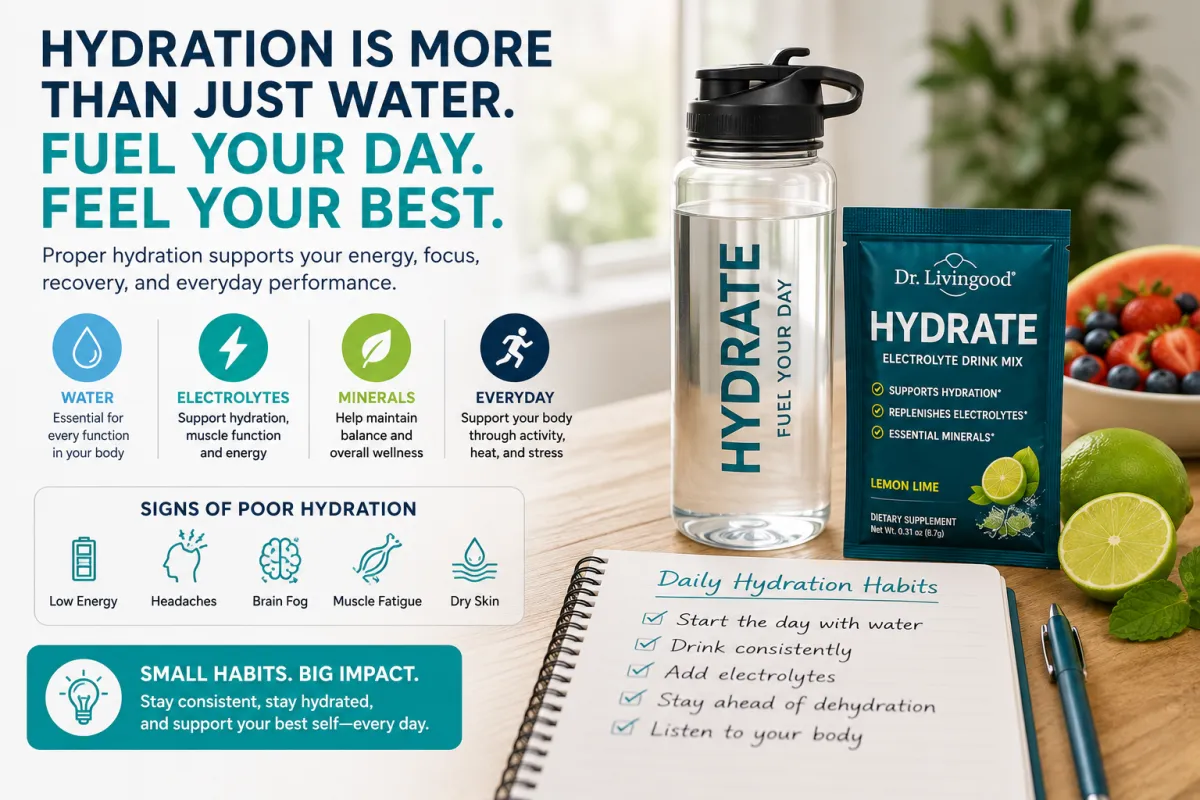
Many people drink water daily but still experience fatigue, headaches, and low energy because hydration depends on more than water alone. Electrolytes, minerals, activity level, and daily habits all influence how effectively the body stays hydrated.
Key Takeaways
Hydration involves both water and electrolyte balance
Low energy and headaches may be linked to poor hydration absorption
Daily habits and activity levels affect hydration needs
Consistent hydration supports focus, recovery, and wellness
Small hydration changes can improve daily performance
The “I Drink Plenty of Water” Problem
You carry a water bottle everywhere.
You refill it constantly.
And somehow… you still feel exhausted.
That frustrating disconnect is more common than people realize.
Many people assume hydration simply means drinking more water. But the body’s hydration system is more complex than that. Water alone is only part of the equation.
Why Water Isn’t Always Enough
Your body relies on electrolytes and minerals to properly absorb and use fluids.
Without the right balance, water can move through the body too quickly without effectively supporting:
Energy production
Muscle recovery
Mental focus
Hydration retention
According to the Harvard School of Public Health, hydration affects nearly every major system in the body, including cognitive performance and physical function.
This is why some people still feel sluggish despite drinking large amounts of water.
Signs Your Body May Need Better Hydration Support
Hydration issues don’t always look obvious.
Common signs include:
Afternoon energy crashes
Headaches
Dry skin
Brain fog
Muscle fatigue
Difficulty recovering after activity
In many cases, these symptoms are subtle enough that people normalize them.
If hydration has become a daily struggle, exploring supportive routines through Hydrate wellness support may help improve consistency.
The Everyday Habits That Drain Hydration Faster
Modern routines quietly increase dehydration risk.
Coffee and Caffeine
Many people start the day dehydrated before realizing it.
Busy Schedules
Long workdays often reduce water and nutrient intake.
Exercise and Sweating
Physical activity increases fluid and electrolyte loss.
Heat and Humidity
Warm environments increase hydration demands significantly.
The CDC Heat Stress Resources notes that even mild dehydration can affect physical and mental performance.
Why Electrolytes Matter More Than Most People Think
Electrolytes help regulate:
Fluid balance
Muscle function
Nerve signaling
Without them, hydration efficiency decreases.
This is one reason athletes, travelers, and active individuals often focus on hydration support rather than plain water alone.
According to MedlinePlus electrolyte guidance, electrolytes play a critical role in maintaining normal body function and hydration balance.
The Difference Between Reactive and Preventive Hydration
Most people only think about hydration after they already feel bad.
By then:
Fatigue has started
Focus drops
Recovery slows
Preventive hydration focuses on staying ahead of depletion instead of reacting to it.
Small daily improvements often produce noticeable results over time.
Hydration and Daily Energy Levels
One of the biggest overlooked benefits of proper hydration is energy support.
When hydration improves, many people notice:
Better focus
More stable energy
Improved recovery
Reduced afternoon fatigue
Hydration influences circulation, oxygen delivery, and nutrient transport throughout the body.
This is why hydration routines often impact more than thirst alone.
If you’re trying to improve daily wellness habits, our daily hydration strategies provide practical support for consistency.
Why Simplicity Works Better Long-Term
Extreme wellness routines rarely last.
Simple habits are easier to maintain.
Examples include:
Starting the day hydrated
Supporting hydration during activity
Replacing fluids consistently throughout the day
Long-term wellness usually comes from repeatable habits rather than dramatic changes.
Hydration Isn’t Just for Athletes
Many people associate hydration support only with intense exercise.
But hydration affects:
Office workers
Parents
Travelers
Students
Anyone dealing with stress or long days
Modern lifestyles increase physical and mental demands that often go unnoticed.
Supporting hydration consistently helps the body handle those demands more effectively.
Frequently Asked Questions
Can you still be dehydrated if you drink water regularly?
Yes. Hydration also depends on electrolyte balance and absorption.
What are common signs of poor hydration?
Fatigue, headaches, brain fog, and dry skin are common indicators.
Do electrolytes actually matter?
Yes. They help regulate fluid balance and muscle and nerve function.
How can I improve hydration consistency?
Building simple daily routines often works better than occasional large water intake.
Final Thoughts
Hydration is about more than simply drinking more water.
Your body depends on proper fluid balance, electrolyte support, and consistent habits to maintain energy, focus, and recovery throughout the day.
Many people spend years feeling tired without realizing hydration may be part of the problem.
If you’re looking for a simpler way to support your daily wellness routine, explore Hydrate wellness support from TATMAR and discover practical hydration strategies designed for real everyday life.
